The free guide to natural coloring
️ Introduction ️
Only 150 years ago, synthetic dye emerged into the world, and within about 50 years, synthetic dye has almost completely replaced natural dye.
The reason for this is rooted in the cultural connection that a person has with color, with class, and with prosperity.
One can still see various customs rooted somewhere in human history - such as the red carpet on which the king walks - symbolizing inexhaustible wealth and abundance.
The color red is one of the most difficult colors to achieve - what would you say about a person who walks (and steps!) on an endless red carpet?
Even during the Renaissance, commoners were painted in shades such as yellow, green, and brown - which were easier to obtain, while nobles, dukes, and royalty flaunted red, blue, and purple attire.
The blue sky in a painting was so expensive to produce, that important paintings painted for the upper class were decorated with a considerable amount of blue sky.
Today, natural dyes are used mainly in cultures that preserve their traditions.
In the Western world, the craft is reserved for people with an affinity for preserving ancient crafts, and very happily, in recent years it has returned to the headlines thanks to its friendliness to the skin, babies, and the environment, and thanks to the growing awareness of a healthy and natural lifestyle.
I hope you enjoy this short guide to natural dyeing and that you too will start experimenting with this wonderful craft!
️ Starting ️
Important highlights:
️ What affects my tone? ️
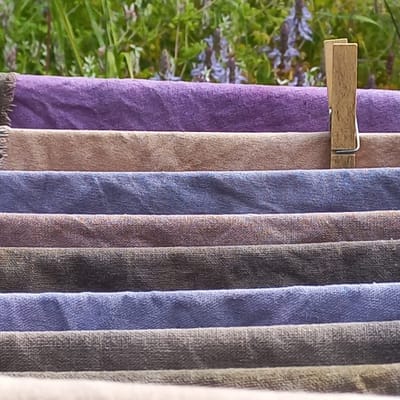
ככל שיהיה יותר חומר אורגני (צמח צבע) במים, נקבל צבע עז יותר
נוכל אם כך לשלוט בצבע שנרצה לקבל
משקל הסיבים שאותם נצבע
לא נקבל את אותו הגוון אם נצבע באותה כמות פיגמנט קילו צמר או 200 ג' צמר
שימוש חוזר - כמה צביעות נערוך באותו הנוזל
דוגמא שאני תמיד נעזרת בה בסדנאות שלי, היא דוגמת התיון:
אם נניח על השולחן 5 כוסות מים רותחים, ונטבול בהן את אותו שקיק תיון, הצבע העז ביותר יהיה בספל הראשון ובספל החמישי הגוון יהיה העדין ביותר
באופן זהה, אם נצבע סיבים, ונשמור את הצבע לשימוש חוזר, מצביעה לצביעה כמות הפיגמנט תרד והגוונים שנקבל יהיו עדינים יותר ויותר.
סוג הסיבים
כל סיב קולט את הצבע באופן המיוחד לו
תוכלו לראות הבדלים בצבעים שיתקבלו בין צמר לבין משי
סיבים מהצומח דורשים הכנה מקדימה לסיבים, ולכן עם מדריך זה אל תנסו לצבוע כותנה, פשתן וכד'.
הכנה מקדימה לסיבים - לפני צביעה
במדריך זה, לא ארחיב על מתודות שונות להכנה מקדימה לסיבים, שמשפיעה על גווני הצבע וגם מאפשרת צביעה של סיבים מהצומח
מתודות שכאלו ניתן ללמוד באופן מעמיק בקורס השנתי בהדפס הבוטני והצביעה הטבעית
️ A winning recipe ️
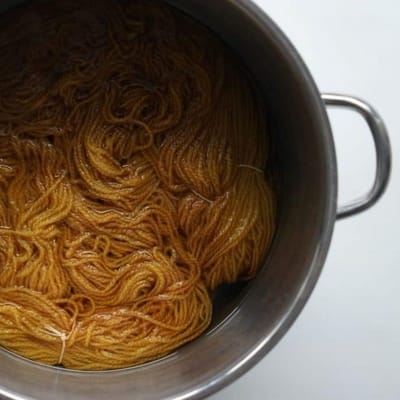
את היחסים במתכון תוכלו לשנות וכך להמשיך להתנסות ולשחק עם גוונים שונים
היחס במתכון הוא לפי נפח ולא משקל
חשוב לדעת
יש חומרים אורגניים כמו אבוקדו ותה שחור שהם סופחי נוזלים, ולכן עם הנסיון תוכלו לדעת האם לשים מראש יותר מים מהרגיל
☘️ המתכון ☘️
חצי סיר של חומר אורגני (מהרשימה מטה)
3/4 סיר מים
הביאו לרתיחה עדינה (בעבוע עדין) ובשלו כשעה עם מכסה
לאחר שעה כבו את האש ותנו למרק הצבע להצטנן במשך 12 שעות
לאחר מכן, סננו את הנוזלים (כמו שכתבתי למעלה, את החומר האורגני ניתן לשמור לבישול שני ואף שלישי)
️ wool dyeing ️
coloring time
This is the time to return the dye water to the pot, and heat it to a gentle boil.
When the water starts to raise small bubbles, put the buckets in the pot.
Make sure that movement of the dyed wool is allowed.
Hue control
Mix the wool with dye to give it a uniform coloring.
When you reach the desired shade, turn off the heat and let the wool remain in the dye (about 12 hours) which will gradually cool.
Then hang the wool to dry in the shade.
After two weeks, wash the wool in a tub with mild ecological laundry soap and dry it again in the shade.
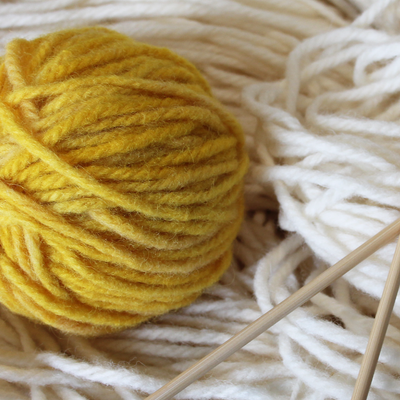
The wool is ready! You can start knitting and sewing